Jack
Earth AbidesJack is Ish’s oldest son, born into the post-disaster family that Ish and Em hoped would keep old names alive. By the time the community gathers to consider its future, Jack is himself a husband and father, taller and more powerful than Ish. His defining appearance is brief but consequential: when Ish argues that the community needs more than families to organize life, Jack gets up and leaves, exposing the difference between his father’s plans and the authority the community actually possesses.
Identity and Family
Ish and Em chose the name John for their first child, intending that the old names should not vanish from the earth. The family account later identifies Jack as Ish’s oldest son, placing him in that first generation born after the collapse. He is one of Ish and Em’s sons; Roger is the other. Jack has children of his own, and his adult life is no longer contained by his identity as Ish’s son.
The family has widened across generations. Mary, Ish’s daughter, is married to Ralph, while Jack and Roger are married and have children. In one family gathering, Ish sees the three younger men still called boys despite their adult responsibilities. Jack’s place in that circle is therefore double: he belongs to Ish’s family, but he also represents a generation building families beyond the immediate authority of its parents.
A Generational Divide
Ish feels estranged from Jack and the other young men despite their close kinship. He is only about twenty years older, yet the distance seems to him like centuries: they did not know the Old Times and cannot look ahead in the same way he can, imagining that the former world might return. The contrast is not simply between a father and his son. Jack’s generation has inherited a world in which the habits and institutions Ish remembers are largely absent.
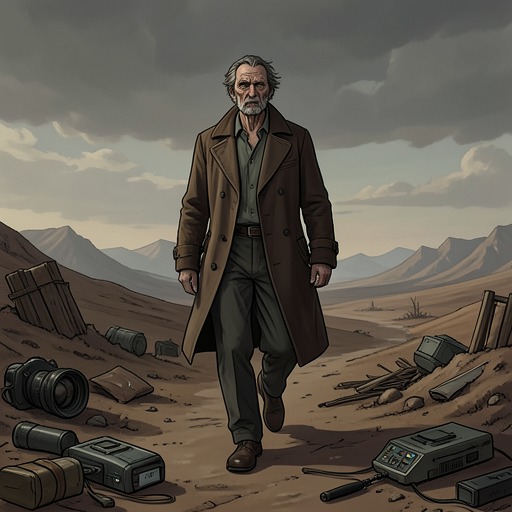
Jack’s strength and stature make that separation visible. He is taller and much more powerful than his father, and he is already a father himself. Ish must reckon with a son who has passed beyond childhood in both body and social position. The old family relation remains, but it no longer guarantees obedience or gives Ish practical command over Jack’s choices.
The Meeting and Jack’s Departure
During a discussion about what the community should do, Ish asks what action it will take. Jack rises from where he has been lounging on the floor and apologizes to his father, saying that he has to go. When Ish presses him, Jack describes the matter as nothing very serious, though something he needs to do. He is already moving toward the door; with his hand on the knob, he concedes that it might wait but says he thinks he should go anyway. The account gives no further explanation of his errand or of why he chooses that moment to leave.
Ish responds with irritation, and the door opening and shutting leaves a short silence in the room. Ezra speaks to ease the awkwardness, inviting Ish to continue and affirming that he has the ideas. The interruption thus changes the meeting without becoming an open confrontation: Jack does not challenge Ish’s argument directly, but he does not remain to hear it, either. Ish recognizes that his anger is misplaced. Jack is no longer a little boy who can be expected to stay simply because his father is speaking.
What His Exit Reveals
Jack’s departure gives concrete force to Ish’s wider concern about the community’s lack of social organization. Ish argues that the family is the only remnant of the old structures, and that parental correction cannot govern children once they grow up. The group has no established laws or recognized form of government, and even a vote would have no means of enforcement beyond public opinion. Jack’s action makes that weakness visible: in an important meeting, Ish cannot prevent even his own son from walking out.
The moment is not evidence that Jack opposes rebuilding civilization, nor does the text explain his private motives. Its significance lies instead in the contrast between Ish’s desire for shared rules and Jack’s freedom to act independently. Ish turns the incident into an example for his argument, while also accepting its personal lesson: the son who once belonged under his care is now an adult beyond his control. Jack’s exit marks both a generational change and the community’s unresolved passage from family life toward collective authority.